 Phoenix in the OakBook a Connection CallPhoenix in the OakBook a Connection Call
The science underneath this
Maybe your scans came back clear. Maybe they showed something real. Maybe you’re not in pain at all, and you simply want to move better. It all goes into the same picture.
Nervous system · movement · perception · hands-on work
Pain is produced by your nervous system. Before it decides how loud to make the signal, it weighs everything it knows — what’s happening in your tissues, and also stress, sleep, past injuries, and how safe your body feels right now.
That’s why two people with the same scan can feel completely different, and why a scan can come back normal while you still hurt. Your pain isn’t imaginary. It’s your body trying to protect you.
And when a scan does show something real, that finding still isn’t the whole story. The same changes turn up in plenty of people who feel fine. When your nervous system is part of the work, comfort and capacity often improve even where the picture hasn’t changed.
When your nervous system senses a threat, it protects you. Muscles guard, range shortens, balance gets cautious. That’s useful right after an injury. Sometimes the protection stays long after the injury has healed.
Pushing harder against that protection rarely works; the body tends to hold on tighter. What often helps is giving your nervous system better information, so it no longer needs to brace.
Your brain builds its sense of safety from three main sources: what you see, your inner ear’s sense of balance, and your body’s sense of where it is in space. When one of those gives it unclear information, it tends to tighten things up.
Some of my work, drawn from both brain and body-based approaches, uses simple eye-movement, balance and movement drills to give your brain clearer information. They can look surprisingly small. That’s the point.
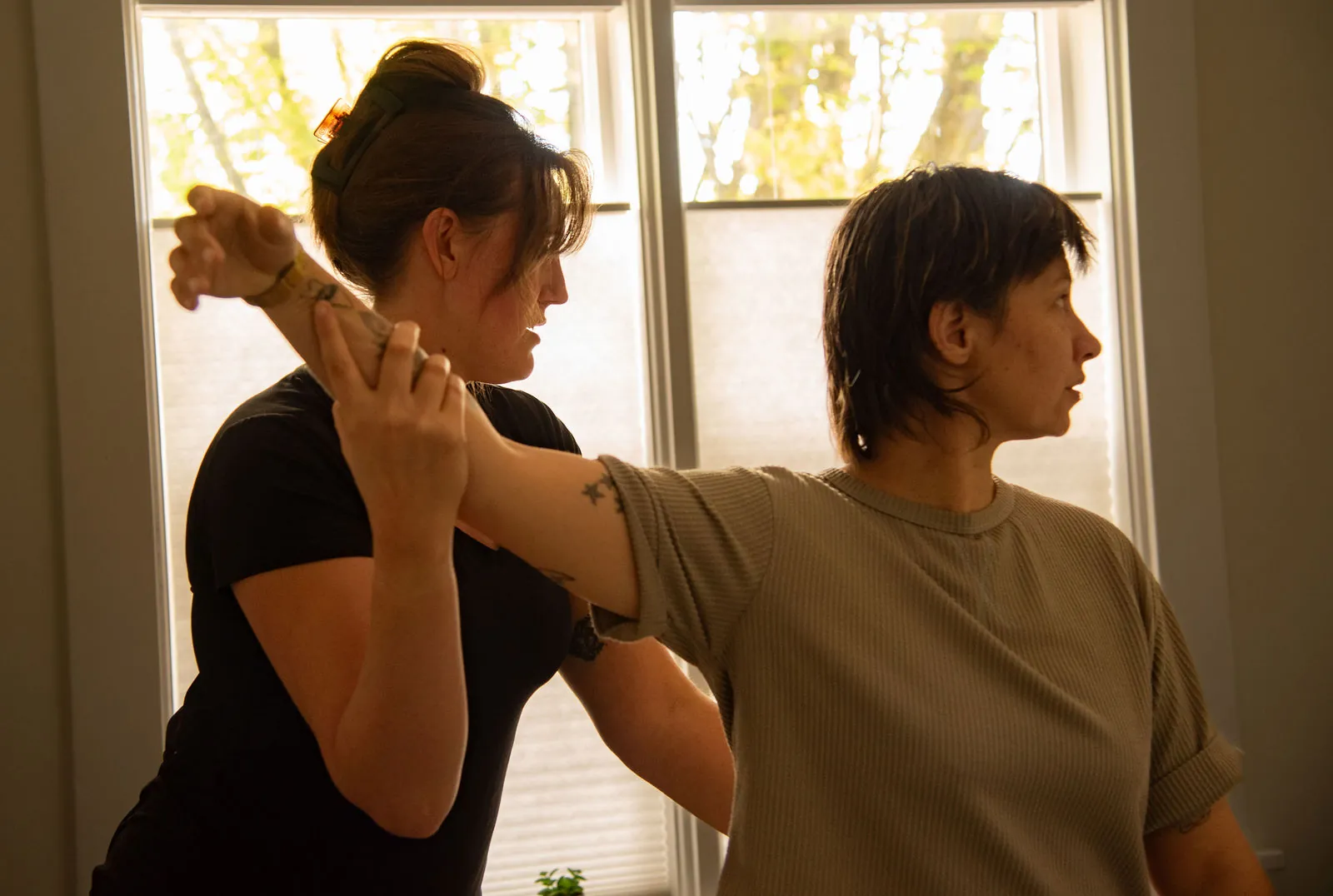
Some sessions feel like the therapeutic massage you’d expect: Swedish, deep tissue, sports massage, stretching, or myofascial work. Others are more interactive. Rather than following a predetermined routine, we choose the tools that best support what your body needs that day.
I’m not attached to a technique. I’m attached to helping your body function in the way that’s most supportive for you.
It isn’t a diagnosis, and it isn’t a replacement for your doctor, physical therapist, or other licensed providers. It works alongside them. If something needs a medical opinion, please get one first.
And it isn’t about forcing your body to do more. It’s about helping it do what it can with greater ease.
See how bodywork sessions work, and what they cost →The first step is a free 30-minute Connection Call. No pressure, nothing booked, nothing owed.
Mon, Tue & Fri 10–6 in person · Wed 9–1 virtual
Ways to begin